
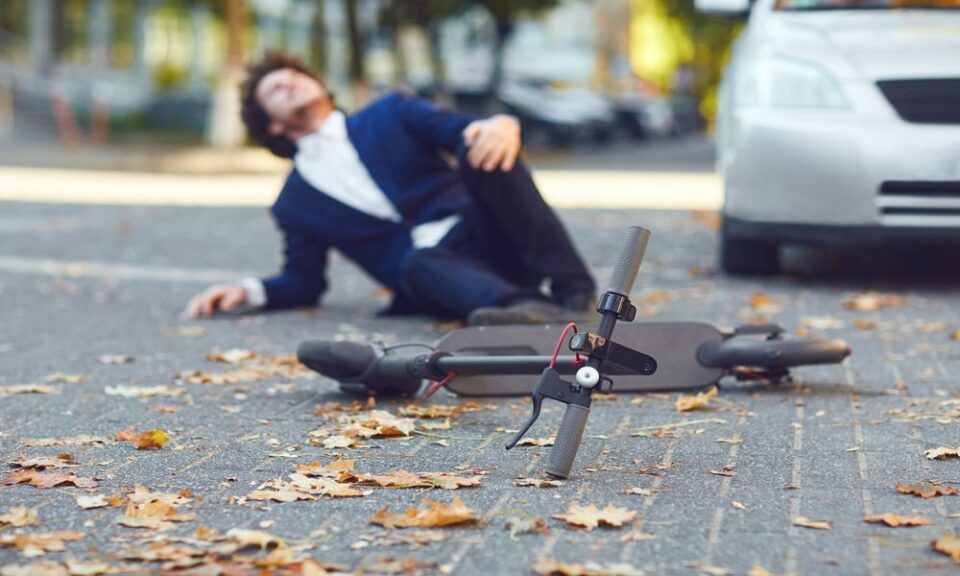
Walk down Grove Street on a weekday evening and count the e-bikes weaving between buses. Add the food delivery riders on stand-up scooters cutting through Newark Avenue traffic, the rented Lime scooters on the waterfront, and the private e-bike commuters heading back from the PATH. Hudson County added thousands of these vehicles in the last five years, and emergency rooms saw the predictable result. A pedestrian gets clipped on a sidewalk. A scooter rider gets right-hooked by a delivery van. Two e-bikes collide head-on in a bike lane. The injuries are real, the medical bills land fast, and the search for an insurance policy to pay them often turns up empty. At The Law Offices of Anthony Carbone, we have watched these cases proliferate, and the legal framework for recovery is not as bleak as the initial conversation suggests. The money is usually there. You just have to know where to look.
Why These Cases Are Different From Car Accidents
E-bike and e-scooter cases sit in a gray zone in New Jersey law. They are not motor vehicles in the traditional sense. They are not pedal bicycles either. The classification affects everything from who has insurance to which traffic laws apply.
Under N.J.S.A. 39:4-14.16 and related provisions, the state divides electric mobility devices into three buckets:
- Low-speed electric bicycles with pedals, capped at 20 mph, treated essentially as bicycles
- Motorized bicycles capable of higher speeds, which require registration and a driver’s license
- Electric scooters, defined separately and largely treated like bicycles for traffic purposes
The everyday consequence is that low-speed e-bikes and most e-scooters do not require auto insurance, do not require registration, and do not require a license. The rider has no policy. The owner has no policy. When the rider injures someone else or gets injured themselves, the search for coverage begins outside the device.
Who Pays When a Car Hits an E-Bike or E-Scooter Rider
The most common Hudson County scenario involves a rider struck by a motor vehicle. The legal analysis follows traditional auto accident principles. The driver of the car is potentially liable for negligence, and the car’s insurance policy provides the coverage.
The wrinkle is on the rider’s side. Personal Injury Protection benefits, which normally pay an injured person’s medical bills under New Jersey’s no-fault system, become a question. The general rule:
- A rider with their own New Jersey auto policy can usually access PIP under that policy, even when injured on an e-bike or scooter
- A rider who lives with a relative who has a New Jersey auto policy can often access PIP under the household policy
- A rider with no household auto policy can sometimes access PIP from the at-fault driver’s policy as a pedestrian-equivalent
- A rider with no available PIP falls back on private health insurance or out-of-pocket payment
The pedestrian analogy matters. New Jersey treats bicyclists struck by a motor vehicle as pedestrians for PIP purposes under N.J.S.A. 39:6A-4. The same principle generally extends to e-bike and e-scooter riders, though the carriers fight it case by case.
The Verbal Threshold Wrinkle
If the injured rider has their own auto policy with the limitation on lawsuit option, the verbal threshold may apply to their claim against the at-fault driver. That means certain injury thresholds have to be met before pain and suffering damages are recoverable. A rider whose own policy has the zero threshold faces no such limitation.
When the At-Fault Party Is Another Rider
Two e-bikes colliding produce a harder coverage question. Neither rider has auto insurance on the device. The available sources of recovery typically include:
- The at-fault rider’s homeowner’s or renter’s insurance policy, which sometimes provides personal liability coverage for non-motor-vehicle incidents
- An umbrella policy if the at-fault rider carries one
- The rider’s personal assets, if litigation is worth pursuing
- The injured rider’s own health insurance, with subrogation rights to be sorted later
Homeowner’s and renter’s policies are the surprise source of recovery in many of these cases. Personal liability coverage of $100,000 to $500,000 sits inside most of these policies, and the carriers do cover bicycle-related injuries under certain circumstances. The exclusion language matters. Some policies specifically exclude motorized vehicles, and the carrier’s first move is usually to argue the e-bike qualifies as motorized for exclusion purposes.
That argument is contestable, especially for pedal-assist e-bikes that meet the low-speed electric bicycle definition.
Food Delivery Riders and the Gig Coverage Question
A large share of the e-bike and e-scooter traffic in Jersey City and Hoboken belongs to food delivery riders working for DoorDash, Uber Eats, Grubhub, and Relay. When one of these riders is injured by a car or causes injury to someone else, the platform’s commercial coverage may apply.
The tiered coverage works similarly to rideshare:
- App off: no platform coverage applies
- App on but no active delivery: limited contingent liability coverage
- Active delivery in progress: a commercial liability policy that can run up to $1 million depending on the platform
Recovering against these policies requires proving the rider was logged in and en route at the moment of the incident. App data, timestamps, and order records become central evidence.
When the Rider Caused the Injury
A pedestrian hit by a food delivery rider on an e-bike has a potential claim against the platform’s commercial policy when the rider was actively making a delivery. The platforms resist these claims and frame the rider as an independent contractor whose actions were not within scope. The same misclassification analysis that applies in employment cases comes into play, and the platform’s level of control over the delivery route, timing, and method matters.
Rental Scooter and Bike Share Programs
Companies operating shared mobility fleets in New Jersey municipalities carry their own liability coverage and require riders to accept terms of use that include waiver and arbitration provisions. The waivers are aggressive. Many cases against the operator end up in private arbitration rather than court.
The waivers do not extend to gross negligence or defective equipment claims. A scooter with a known mechanical defect, a battery that overheated, or a brake that failed creates a product liability claim against the operator and potentially the manufacturer, separate from the basic negligence theory.
How The Law Offices of Anthony Carbone Works These Cases
The firm’s approach to an e-bike or e-scooter case starts with identifying every available source of coverage rather than accepting the first denial:
- Pulling the injured rider’s auto policy and every household auto policy to assess PIP and UM/UIM availability
- Reviewing homeowner’s and renter’s policies for personal liability coverage
- Preserving app data, route records, and order timestamps when delivery work is involved
- Identifying defective equipment claims against rental operators and manufacturers
- Coordinating with health insurance carriers on subrogation and lien negotiation
The firm’s auto accident pages and bicycle accident coverage include related background. The New Jersey Motor Vehicle Commission also publishes guidance on e-bike classifications at nj.gov/mvc that figures into many of these analyses.
An e-bike or e-scooter crash in Hudson County does not have to end with you eating the medical bills because the rider had no policy. New Jersey law spreads the risk across more sources than most people realize, and identifying them early often turns an apparent dead end into a workable claim. The Law Offices of Anthony Carbone offers a free consultation to map out the available coverage, evaluate your injuries, and pursue every defendant with a real ability to pay. Call 201-963-6000 before the carriers close the file on a case that still has options.
